The SNCF Voyageurs Board of Directors has approved an additional order for 30 new-generation Avelia Horizon very high-speed trains for close to 1.4 billion euros as well as options for up to 20 additional trains. First deliveries are scheduled for 2031.
This order concerns the four-voltage version of this very high-speed train, which meets the needs of European traffic. The international trainsets will operate on the rail networks of five countries under the Eurostar banner: Germany, Belgium, France, the Netherlands and the United Kingdom, as far as London (St. Pancras International railway station) via the Channel Tunnel – a first for a double-deck high-speed train.
This is the third optional tranche of the framework contract between SNCF Voyageurs and Alstom:
- 100 for commercial operation in France (2018);
- 15 for commercial operation in Europe (2022);
- 30 for DE, BE, FR, NL, UK for Eurostar (2025).
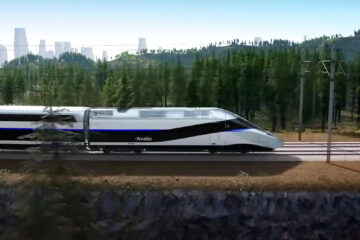
Alstom released a simple design impression of a grey train with green logo named Eurostar ‘Celestia’:

About the Avelia Horizon
Equipped with two compact power cars and nine articulated double-deck cars, the Avelia Horizon can comfortably accommodate more than 1,000 passengers (in multiple units), while travelling at a maximum speed of 320 km/h. It consumes 20% less energy than the previous generation, thanks to its advanced aerodynamic design and optimised traction.
Maintenance costs for the Avelia Horizon train have been reduced by 30% compared to the previous generation. Components have been redesigned to simplify and space out maintenance operations, thereby reducing costs and downtime. Predictive maintenance has been integrated into the design from the outset, with a remote diagnostics system to anticipate maintenance operations and increase reliability.
Thanks to these improvements, Avelia Horizon offers a significant reduction in operating costs per seat.
To better meet the growing demand from the French and international markets for its Avelia very high-speed train platform, Alstom has announced an investment of €150 million to increase the Group’s production capacity at several French sites.
Ten of Alstom’s 14 French sites will be involved in this project:
- Belfort, for power cars ;
- La Rochelle, for passenger cars and project management;
- Villeurbanne, for the control-command computer system, the passenger information system and on-board equipment;
- Ornans, for the motors;
- Le Creusot, for the bogies;
- Tarbes, for traction and electrical cabinets;
- Toulouse Electrical Development Centre, for electrical circuits;
- Petit-Quevilly, for transformers;
- Saint-Ouen, for design and signalling;
- and Valenciennes’ Components Development Site for interiors.
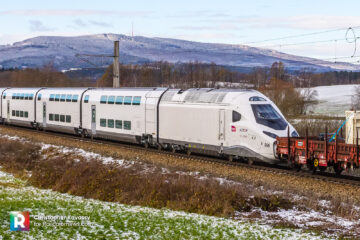
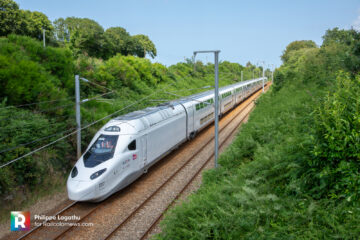
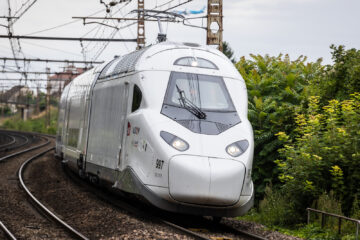
The French version of the initial order is close to commercial operation: